
Market Analysis
US Inflation Test: Markets Brace for September CPI Amid a Hormuz Oil Shock and an Unusual Fed Hiking Cycle
Oct 14, 2026
share_this_article


back_to_articles
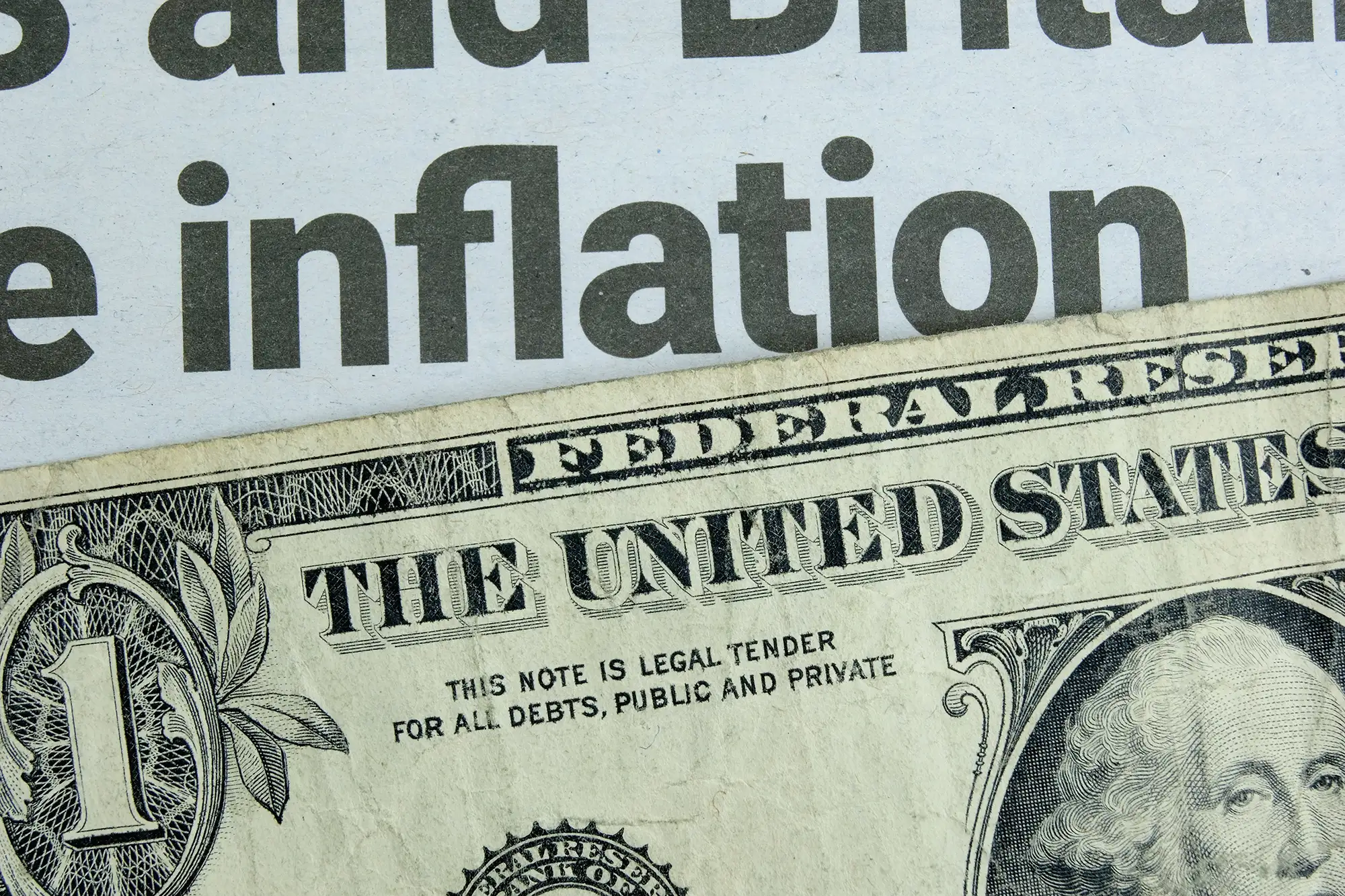
The US Bureau of Labor Statistics publishes the September Consumer Price Index at 8:30 ET today, and it arrives at an unusually tense moment for markets: inflation has reaccelerated for two straight months, the Federal Reserve just raised rates rather than cut them, and a geopolitical oil shock out of the Strait of Hormuz is feeding directly into the price data the Fed is trying to tame. Equities head into the print near record highs, which raises the stakes for any surprise.
What's Expected
August's CPI already showed inflation moving the wrong way: headline CPI rose 3.4% year-on-year (0.4% month-on-month), up from July's 3.4% y/y and 0.1% m/m, while core CPI held at 2.4% y/y (0.3% m/m). For September, consensus sits close to 3.6–3.7% y/y on the headline, with core expected around 2.4% y/y. The Cleveland Fed's nowcast (as of October 7) points to a similar outcome: 0.53% m/m and 3.60% y/y headline, with core at 0.20% m/m and 2.39% y/y. If the headline print lands near 3.7%, it would mark a third consecutive month of accelerating annual inflation.
Why Inflation Keeps Reaccelerating
- Energy, not demand, is the swing factor. The Iran conflict has pushed Brent crude above $100 a barrel for extended stretches this quarter, with Iran's Revolutionary Guard repeatedly halting, boarding or turning back tankers in the Strait of Hormuz. US pump prices followed: AAA reported a record national average of $4.33 a gallon in September. Economists at Continuum Economics expect September energy CPI to rise roughly 5.5% on the month.
- Airfares are following fuel costs higher, up an estimated 23.4% y/y.
- Shelter is the moderating force. Shelter inflation eased to 3.0% y/y in August, with rent and owners' equivalent rent both slowing to 0.2% m/m — the main reason core CPI hasn't accelerated as sharply as headline.
- Consumers already expect this to continue. The University of Michigan's survey has one-year inflation expectations at 4.6%, well above the Fed's comfort zone.
The Fed's Unusual Position
This is not the rate-cutting cycle markets were pricing a year ago. The Fed raised its target range by 25 basis points to 3.75%–4.00% on September 16, and its dot plot median implies one more hike before year-end. As of early October, futures markets were pricing roughly a 20% chance of a hike at the October 27–28 FOMC meeting and about 81% odds of at least one more hike by December. A hot CPI print today would likely firm up those odds further; a soft one would give the Fed room to pause.
That combination — a central bank hiking into an energy-driven inflation shock rather than a demand-driven one — is the key tension traders should hold in mind. It raises the kind of stagflation-adjacent questions (higher prices, policy tightening, uncertain growth) that don't resolve cleanly in either direction.
Market Backdrop Heading In
Risk assets have largely shrugged this off so far. The S&P 500 closed at 7,773.95 on October 5 (up 13.6% year-to-date) and the Nasdaq Composite hit a fresh record at 27,477.31 (up 18.2% YTD), even as the 10-year Treasury yield climbed to 5.31% — a level that would normally weigh harder on equity valuations, particularly rate-sensitive growth and tech names. Gold is holding firm near $4,160/oz, reflecting both safe-haven demand tied to the Iran conflict and hedging against a stickier inflation path. Brent has been trading in the $100–103 range, with Goldman Sachs warning it could stay above $100 through the rest of 2026 if the Hormuz disruption extends another month.
Asset Market Impact: Two Scenarios
If CPI runs hot (headline near or above 3.7% y/y, core above 2.4%): expect Treasury yields to push higher, the dollar to find support on firmer hike odds, and equities — especially high-multiple tech — to come under pressure as discount-rate concerns resurface. Gold's reaction would be mixed: safe-haven and inflation-hedge demand could cushion it against the drag of higher real yields.
If CPI comes in soft (headline below 3.5%, core at or under 2.3%): risk assets could extend their record run, yields likely ease back from recent highs, and the dollar could soften as hike-by-December odds slip. Oil's path stays largely independent of the CPI outcome, since the Hormuz risk premium is geopolitical rather than data-driven — a reminder that energy could keep feeding back into inflation regardless of today's number.
Bottom Line
Markets are watching a September CPI report that could reinforce or complicate an already unusual setup: a Fed hiking rates while an oil-driven, geopolitically charged inflation shock works through the data, against a backdrop of record-high equities and a 10-year yield above 5%. Traders will want to watch the 15:30 Beirut release for the headline/core split in particular — a core-driven surprise would carry more weight for Fed expectations than an energy-driven one, which markets may already be discounting. The key risk into the print is a scenario where hot inflation data collides with stretched equity valuations.
This report is intended for market information and planning. It is not investment advice.
related_articles

Market Analysis
Oil Jumps Past $110 After Saudi Drone Strike, But Gold’s Safe-Haven Playbook Is Broken
Oct 22, 2026

Market Analysis
France's Debt Crisis Shakes the Euro as Riots Erupt Ahead of a Pivotal Budget Vote
Oct 20, 2026
Market Analysis
Wall Street’s Biggest Banks Report Into an Oil Shock and a Rate Scare
Oct 12, 2026