Market Analysis
Energy Markets Under Pressure: Oil, Gas, and Geopolitical Risk Outlook
Mar 5, 2026
share_this_article


back_to_articles
The conflict involving the US, Israel, and Iran has materially changed the outlook for global energy markets. What was once treated as a geopolitical risk premium is now becoming a real supply and transport issue, with the Strait of Hormuz at the center of the disruption.
A Critical Chokepoint
The Strait of Hormuz remains one of the most important arteries in global energy trade, carrying roughly one-fifth of the world’s oil flows. Even without a formal shutdown, market conditions now resemble a de facto blockade, as security concerns are reducing normal shipping activity and raising the cost of moving energy through the region.
Key pressure points include:
- Lower tanker traffic through the Strait
- Higher insurance and freight costs
- Delays in cargo movement
- Rising storage pressure for regional producers
This shifts the market from a fear-driven reaction to a more tangible supply-chain problem.
From Risk Premium to Supply Disruption
The main concern is no longer just headline risk. When vessels avoid the route, exports slow, inventories build locally, and producers face greater difficulty clearing supply. That creates a more durable source of upward pressure on oil prices, especially if disruptions persist.
A Broader Regional Risk
The situation also raises the risk that energy market stress spreads beyond Hormuz itself. Any attacks on Gulf infrastructure, further disruption to regional shipping, or escalation through proxy channels would broaden the supply shock and keep volatility elevated.
The main risks to watch are:
- Pressure on Gulf oil and gas infrastructure
- Rising costs to secure commercial shipping
- Additional disruption in nearby maritime routes such as the Red Sea
If these risks intensify, the entire region is likely to be priced as a higher-risk energy zone.
Below is the technical outlook:
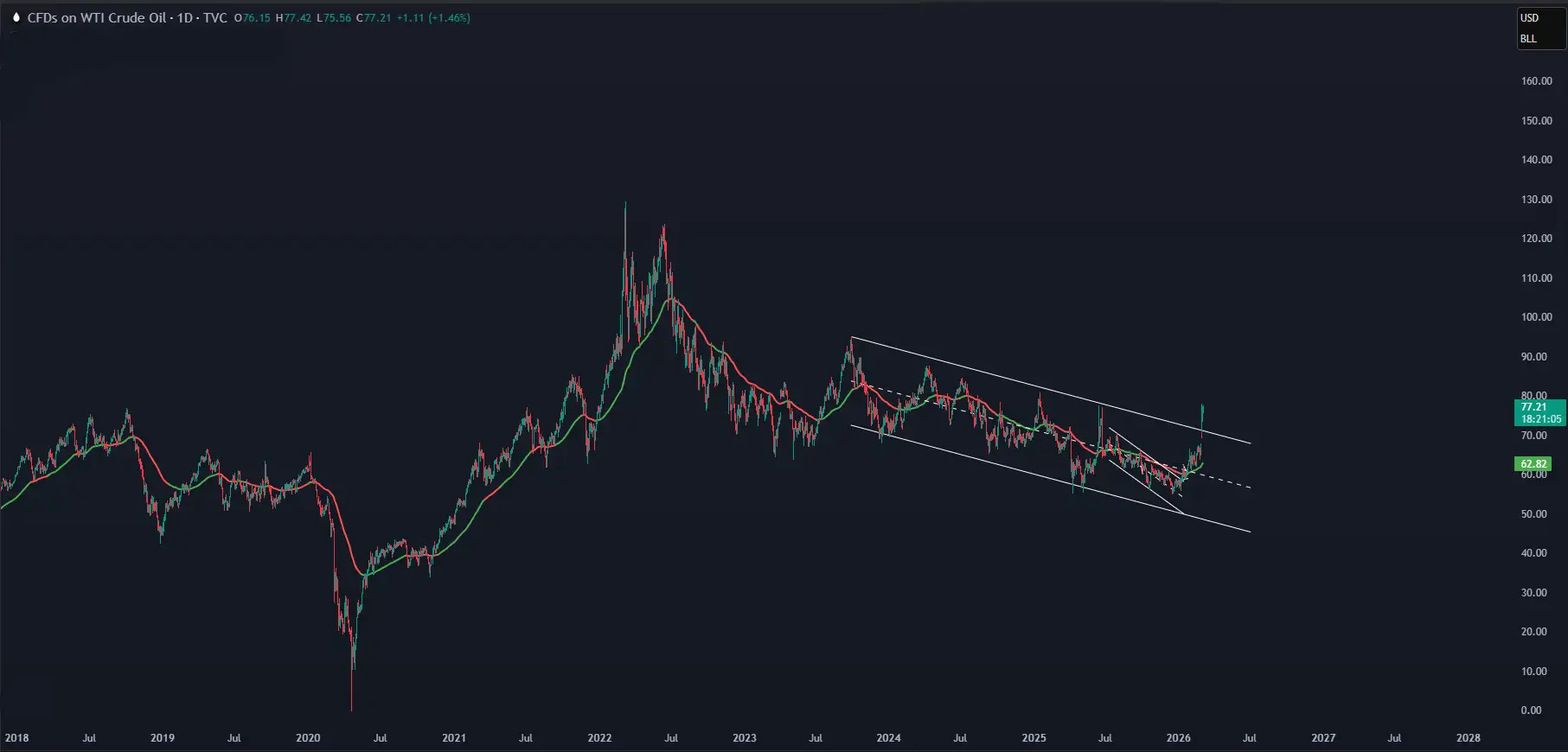
WTI crude has started to recover after rebounding from the lower end of its broader descending channel, a move that suggests selling pressure is easing and short-term bullish momentum is beginning to build. The recent push higher also places price back near a key technical inflection zone, where the market is testing whether this rebound can develop into a more meaningful breakout.
The immediate resistance to watch stands in the $77–$80 area, which marks the first major barrier for the current recovery. A sustained break above this zone would strengthen the bullish case and could open the way for a move toward $84, followed by the upper boundary of the wider channel in the $88–$90 region.
Natural Gas Looks Even More Exposed
Natural gas may be even more exposed than oil in this environment. Qatar, one of the world’s key LNG exporters, depends heavily on the Strait of Hormuz, so any prolonged disruption could threaten a meaningful share of global flexible gas supply.
That would likely lead to:
- Tighter LNG availability
- Stronger competition between Asian and European buyers
- Higher gas and power prices, particularly in Europe
This means the shock is not limited to crude oil; it also has the potential to tighten global gas markets very quickly.
What This Means:
The market has moved away from a weak-demand narrative and into a supply-risk regime. Energy prices are now being driven more by transport security, export reliability, and geopolitical escalation than by underlying consumption trends.
The most likely implications are:
- Higher oil prices if disruption remains in place
- Elevated volatility across energy markets
- Upward pressure on gas, fuel, and transport costs
- Added inflation pressure alongside weaker growth
Bottom Line
This is no longer just a regional political story. The conflict has directly increased the risk premium embedded in oil and gas markets by threatening one of the world’s most important energy transit routes. As long as shipping flows remain impaired and regional escalation risks stay high, energy markets are likely to remain tighter, more volatile, and more inflationary.