Market Analysis
NFP Preview: August Jobs Report Set to Test the Fed's Hawkish Pivot
Sep 4, 2026
share_this_article


back_to_articles
The Bureau of Labor Statistics releases the August employment report at 8:30 a.m. ET today, and it lands at an unusually consequential moment: markets are currently leaning toward a Federal Reserve rate hike, not a cut, at the September 16 FOMC meeting. A single data print rarely carries this much weight, but after a volatile summer for labor data, this one does.
Consensus estimates point to a modest rebound, with economists looking for roughly 53,000 to 58,000 jobs added in August and the unemployment rate holding at 4.1%. The range of forecasts is unusually wide for a headline print — Wells Fargo has pointed to a stronger 80,000 gain, while Fifth Third Commercial Bank has flagged downside risk of a 25,000 decline — underscoring how uncertain the underlying trend has become.
That uncertainty traces back to July's report, which came in well below expectations: payrolls fell by 23,000 against forecasts calling for gains of 83,000 to 95,000, and May and June figures were revised down by a combined 103,000. The unemployment rate actually ticked down to 4.1% from 4.2%, but for a discouraging reason — labor force participation slipped to 61.4%, its lowest level in more than five years. Wage growth also cooled, with average hourly earnings up just 3.2% year-over-year, the slowest pace since May 2021. Government payrolls led the July decline, down 53,000, alongside softness in retail, leisure and hospitality, and healthcare.
The Fed reaction has been unusually volatile. In the days after the July miss, traders sharply pared back hike bets and priced a hold as the most likely September outcome. That shifted again following Fed Chair Kevin Warsh's hawkish Jackson Hole debut, which dismissed recent soft inflation prints as durable evidence of disinflation and pushed the market-implied probability of a September hike back up toward the 60-70% range. Today's payrolls print is the last major data point before that meeting: a soft number would likely revive hold or cut bets, while a firm one would cement hike expectations and reinforce the case for a more restrictive Fed.
What to watch across FX and gold
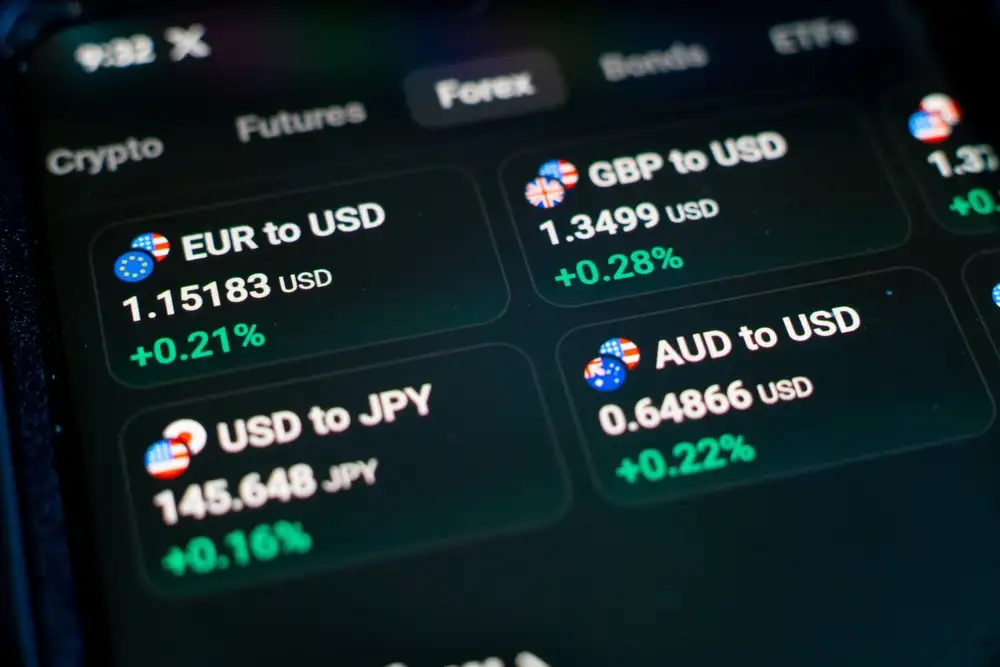
EUR/USD: Analysts at ING target 1.16 on a one-month view and 1.18 by year-end. A soft payrolls number that revives rate-hold or rate-cut expectations would likely put that 1.18 handle back in play as the dollar loses some of its recent support.
GBP/USD: The pair has been trading a 1.3350–1.3700 band into the release. J.P. Morgan sees sterling easing to around 1.31 by September, suggesting room for further downside if today's data cements hike expectations and broad dollar strength.
USD/JPY: Forecasts are unusually dispersed, from Scotiabank's 150 to J.P. Morgan's 164, reflecting genuine disagreement over the path of the US-Japan rate differential. A strong print that reinforces September hike odds would support continued carry-driven yen weakness; a weak one could accelerate any unwind.
Gold: The metal is consolidating in a wide range. A break below $4,400 opens the door to $4,300, while a daily close above $4,650–$4,700 would restore bullish momentum toward $4,800. As with the major currency pairs, the directional catalyst is straightforward — weak jobs data revives rate-cut or rate-hold hopes and should support gold, while a strong print reinforces hike expectations and pressures it lower.
Given the unusually wide range of forecasts and the market's outsized sensitivity to this release, positioning into 8:30 a.m. ET is likely to stay cautious, with volatility concentrated in the minutes immediately following the print.