
Market Analysis
Greenland Deal Eases Tariff Risk, PCE Is Next
Jan 22, 2026
share_this_article


back_to_articles
President Trump paused the planned Feb. 1 tariffs on eight European nations after announcing progress toward a Greenland-related “framework” agreement with NATO Secretary-General Mark Rutte. The move triggered a relief rebound in risk assets after the prior session’s sharp drawdown.
However, geopolitical risk remains unresolved, and the next major market catalyst is U.S. PCE inflation the final key inflation checkpoint ahead of the FOMC decision. Together, geopolitics + PCE create a high-sensitivity setup for USD direction, yields, and equity risk appetite.
1. Event Overview: Tariffs Paused After “Framework” Greenland Deal
- Trump confirmed tariffs planned for Feb. 1 will not be imposed (initially proposed at 10%, rising toward 25% by June).
- The targeted group included major European economies (France, Germany, UK, Denmark, Sweden, Norway, Netherlands + an additional country mentioned).
- The decision was framed as conditional on progress via a Greenland “framework” negotiation channel involving senior U.S. officials reporting directly to Trump.
Interpretation: The tariff pause is a de-escalation headline that reduces immediate trade-risk premia, but the broader strategic dispute around Greenland keeps uncertainty structurally elevated.
2. Why the Market Response Was Immediate
The prior selloff was driven by “risk-off positioning” tied to tariff escalation and geopolitical uncertainty. The pause triggered a mechanical unwind:
- Equities: sharp rebound after the largest decline in ~3 months
- Rates: yields eased after spiking on escalation risk
- Gold: cooled off from extreme highs after crisis-bid flows
- Bitcoin: held firm / slightly higher, reflecting resilience amid volatility
Key dynamic:
Geopolitical escalation → flight to safety.
Geopolitical de-escalation → fast risk repricing + short-covering bounce.
3. The Next Trigger: U.S. PCE Inflation (Macro Inflection Point)
PCE is the Fed’s preferred inflation gauge and typically carries more policy weight than many other releases. In this context, it matters even more because markets are already fragile and headline-driven.
Why PCE is pivotal now:
- It anchors the “Fed hold vs future easing” path
- It moves USD, front-end rates, and equity discount rates quickly
- It can amplify volatility when positioning is one-sided post headline rebound
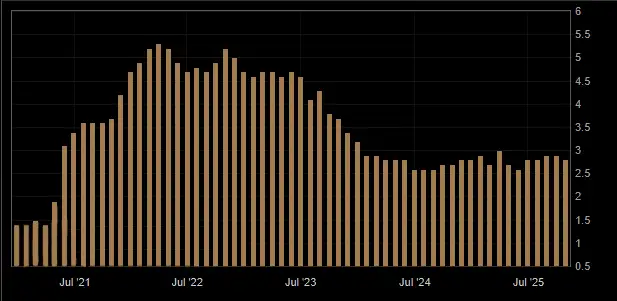
4. Scenario Map: Hot vs Soft PCE (Expected Market Reactions)
Scenario A: Stronger/Hot PCE
- USD strengthens
- “Rates stay higher for longer” confidence increases
- Equities face valuation pressure (discount rate effect)
- Risk appetite fades; volatility can re-expand
Scenario B: Softer PCE
- USD weakens
- Easing expectations revive (or at least reduce hawkish tail risk)
- Equities find renewed support
- Potential follow-through rally — but with higher volatility if the surprise is large
5. What to Monitor
Macro Pricing
- DXY reaction (inflation surprise sensitivity)
- 10Y yield direction (financial conditions + growth narrative)
Risk Regime
- S&P 500 / Nasdaq: rebound continuation vs dead-cat bounce
- Volatility: stabilization vs renewed spike
Hedges
- Gold: does it remain bid (structural uncertainty) or fade (risk normalization)?
Bottom Line
The tariff pause reduced near-term trade escalation risk and allowed equities to rebound. But the market remains vulnerable to macro catalysts, and PCE is the next high-impact event that can reset the USD, yields, and risk sentiment in one print.
related_articles

Market Analysis
Oil Markets in Turmoil: War Premium, Diplomatic Deadlines & the Path Forward
Mar 27, 2026
Market Analysis
Federal Reserve Holds Steady Amid Geopolitical Uncertainty and Inflation Risks
Mar 18, 2026

Market Analysis
Energy Markets Under Pressure: Oil, Gas, and Geopolitical Risk Outlook
Mar 5, 2026